Engine balance is one of the most critical yet often overlooked aspects of internal combustion engine design. While many drivers focus on horsepower, torque, or fuel efficiency, the smoothness, durability, and reliability of an engine largely depend on how well it is balanced. At the heart of this balance lies the crankshaft and, more specifically, its counterweights. Understanding why counterweights matter helps explain how engines run smoothly at high speeds and survive millions of combustion cycles.
What Is Engine Balance?

Engine balance refers to how well the rotating and reciprocating masses inside an engine are managed to minimize vibration. These masses include:
-
Pistons
-
Connecting rods
-
Crankshaft journals
-
Bearings and flywheel
As pistons move up and down, they generate forces that can cause vibration, noise, and stress. If these forces are not properly controlled, they can lead to premature wear or even catastrophic failure.
The Role of the Crankshaft
The crankshaft converts the linear motion of pistons into rotational motion that ultimately drives the wheels. However, this conversion is not naturally smooth. Each piston changes direction twice per revolution, creating inertia forces that try to shake the engine.
This is where crankshaft counterweights come into play.
What Are Counterweights?
Counterweights are carefully shaped and positioned masses cast or machined into the crankshaft. Their primary function is to offset the forces created by the pistons and connecting rods during rotation.
Main purposes of counterweights:
-
Reduce vibration and engine shake
-
Lower stress on main bearings
-
Improve engine smoothness
-
Allow higher safe RPM operation
Without counterweights, engines would be harsh, noisy, and short-lived.
How Counterweights Improve Engine Balance
1. Balancing Rotating Mass
Rotating components such as crankshaft journals move in a circular path. Counterweights directly oppose these masses to reduce centrifugal forces.
2. Reducing Reciprocating Forces
While pistons move linearly, part of their mass is “simulated” as rotating mass for balancing calculations. Counterweights help neutralize these forces, reducing vertical vibration.
3. Minimizing Bearing Loads
Unbalanced forces increase load on crankshaft bearings. Counterweights reduce these loads, extending bearing and crankshaft life.
Types of Engine Balance
| Balance Type | Description | Typical Application |
|---|---|---|
| Static balance | Weight evenly distributed at rest | Simple rotating parts |
| Dynamic balance | Balanced during rotation | Crankshafts, flywheels |
| Internal balance | Counterweights fully on crankshaft | Many V8 engines |
| External balance | Additional weights on flywheel or pulley | Some older engines |
Modern engines are almost always dynamically balanced for optimal performance.
Counterweights and Engine Performance
Benefits of Properly Designed Counterweights:
-
Smoother idle and acceleration
-
Reduced vibration at high RPM
-
Improved driver comfort
-
Longer engine lifespan
High-performance and racing engines often use larger or more precisely machined counterweights to maintain balance at extreme engine speeds.
What Happens Without Proper Counterweight Balance?
Poor crankshaft balance can cause:
-
Excessive vibration
-
Crankshaft flex and fatigue
-
Main bearing wear
-
Loosened bolts and components
-
Reduced engine efficiency
Over time, these issues can lead to engine failure, even if all other components are in good condition.
Counterweights in Different Engine Configurations
| Engine Type | Counterweight Importance |
|---|---|
| Inline-4 | Moderate, often supplemented by balance shafts |
| Inline-6 | Naturally well-balanced, fewer counterweights needed |
| V6 | High importance due to complex firing order |
| V8 | Critical, especially at high displacement |
| High-RPM engines | Extremely critical for durability |
Engine layout directly affects how much balancing assistance is required from the crankshaft.
Manufacturing and Precision
Crankshaft counterweights are designed using advanced simulations and are often fine-tuned through dynamic balancing machines. In performance engines, material may be added or removed to achieve perfect balance.
Common materials include:
-
Forged steel
-
Cast iron
-
Billet steel for high-performance engines
Precision at this stage ensures smooth operation throughout the engine’s life.
Maintenance and Replacement Considerations
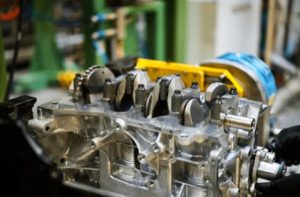
When rebuilding or replacing an engine:
-
Crankshaft balance must match piston and rod weights
-
Mixing mismatched components can disrupt balance
-
Rebalanced crankshafts are recommended for engine upgrades
If you are sourcing engine assemblies or components, quality and proper balancing are essential. You can buy Complete Engine online to ensure components are designed and assembled to meet correct balance standards.
Summary Table: Why Counterweights Matter
| Aspect | Impact |
|---|---|
| Vibration reduction | Smoother engine operation |
| Bearing protection | Lower mechanical stress |
| RPM capability | Safer high-speed operation |
| Engine longevity | Reduced fatigue and wear |
| Driver comfort | Less noise and harshness |
Conclusion
Counterweights are a fundamental element of crankshaft design and engine balance. By counteracting the forces created by pistons and rotating masses, they dramatically reduce vibration, protect bearings, and enable engines to operate smoothly and reliably across a wide RPM range. Whether in a daily driver or a high-performance engine, properly balanced crankshafts are essential for durability and efficiency.
When repairing, rebuilding, or upgrading an engine, never overlook balance considerations. Choosing well-engineered components is key to long-term reliability. For dependable, professionally assembled powertrain solutions, you can buy Complete Engine online and ensure your engine delivers smooth, balanced performance for years to come.